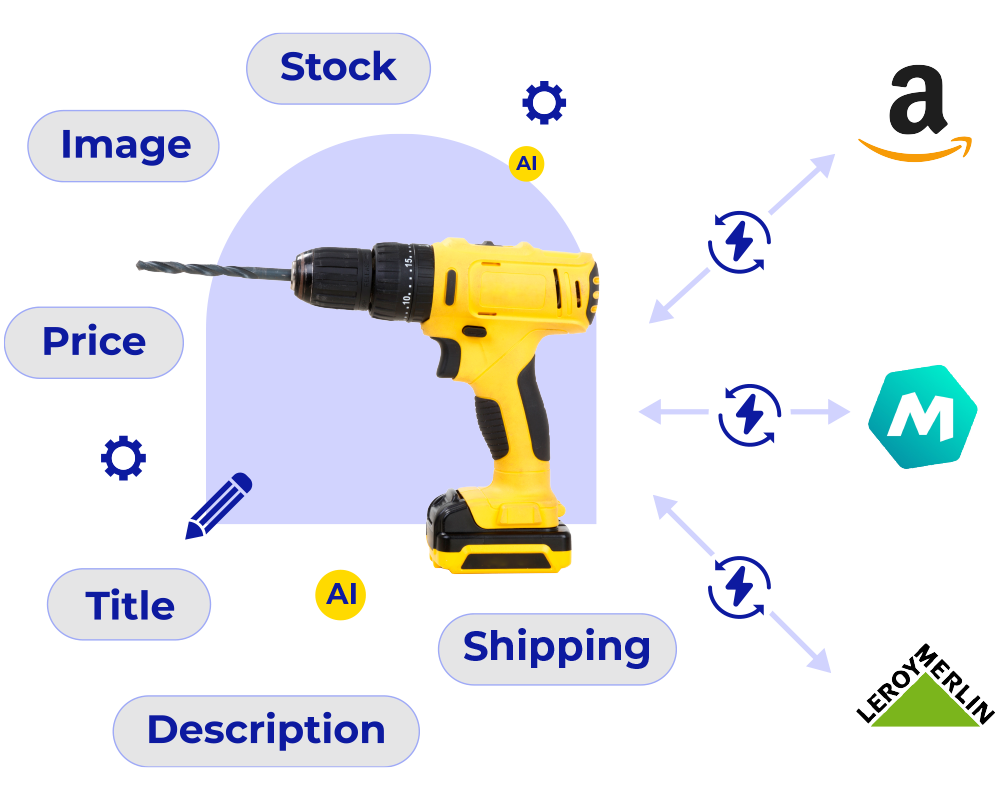
Centralizing multi-marketplace management means using a single platform to control product data, orders, pricing and performance across all sales channels. Instead of managing each marketplace separately, ecommerce teams can streamline operations, reduce manual workload and maintain consistency by unifying their processes. This approach enables brands and retailers to scale faster, minimize errors and gain full visibility over their marketplace ecosystem. By combining structured data management and automation, businesses can efficiently pilot all their channels from one place.

  • Centralize catalogue, orders and pricing in one platform
  • Automate product feed adaptation for each marketplace
  • Reduce operational workload and manual errors
  • Gain full visibility across all marketplaces
  • Scale efficiently across multiple channels and countries


Why centralizing marketplace management is essential

Managing multiple marketplaces independently creates fragmented workflows and operational inefficiencies. Each channel comes with its own requirements, interfaces and processes, forcing teams to duplicate tasks.

Common issues include:

  • Manual updates of product data across platforms
  • Inconsistent stock and pricing management
  • Multiple back offices for order processing
  • Lack of visibility on listing performance and errors

Centralization addresses these challenges by creating a single operational hub where all marketplace activities are managed consistently.


What does a centralized multi-marketplace setup look like?

A centralized setup relies on a unified system that connects all marketplaces and standardizes operations.

Key components include:

  • Unified product catalogue: one source of truth for all product data
  • Automated feed distribution: product data adapted and sent to each marketplace
  • Real-time synchronization: stock, prices and orders updated continuously
  • Centralized monitoring: performance and errors tracked in one interface

This structure allows teams to manage multiple marketplaces without multiplying operational complexity.


Methods to centralize and simplify operations

Build a single source of truth for product data

A centralized catalogue ensures that all marketplaces receive consistent and accurate product information. Updates are made once and automatically applied across channels.

Automate marketplace-specific requirements

Each marketplace has unique formats and attributes. Automation enables:

  • Category mapping aligned with marketplace taxonomies
  • Attribute transformation and enrichment
  • Adaptation of product listings without manual effort

Synchronize stock and pricing across channels

Centralized synchronization ensures operational consistency:

  • Prevent overselling with real-time stock updates
  • Maintain consistent pricing strategies
  • React quickly to changes or promotions

Unify order management

Handling orders from all marketplaces in one place simplifies fulfillment and customer support. Teams no longer need to switch between multiple systems.

Monitor and optimize from one interface

Centralized dashboards provide visibility into:

  • Listing errors and data issues
  • Marketplace performance by product or channel
  • Opportunities for optimization

This enables faster decision-making and continuous improvement.


Tools required for centralized marketplace management

To successfully centralize operations, businesses need a platform that combines several capabilities:

  • Marketplace integrations to connect multiple channels
  • Feed management tools to structure and distribute product data
  • Catalogue enrichment features to improve listing quality
  • Order synchronization systems to unify operations
  • Error monitoring tools to detect and resolve issues quickly

These tools form the backbone of a scalable and efficient marketplace strategy.


Practical example: from fragmented to centralized operations

A retailer managing five marketplaces manually often faces duplicated work and inconsistent data. Each update requires multiple actions across platforms, increasing the risk of errors.

By centralizing operations:

  • Product data is managed once and distributed automatically
  • New marketplaces can be added without rebuilding processes
  • Teams reduce time spent on manual tasks and focus on optimization

This shift significantly improves efficiency and scalability.


How NetMarkets helps

NetMarkets by Lengow provides a centralized platform designed to manage all marketplace operations from one place.

With NetMarkets, ecommerce teams can:

  • Connect to 70+ marketplaces and 200+ channels through a single interface
  • Manage and optimize product feeds for each marketplace
  • Automate category mapping and attribute enrichment to improve listing performance
  • Synchronize stock, prices and orders in real time
  • Monitor errors and listing issues to ensure data quality
  • Expand to international marketplaces without increasing operational complexity

NetMarkets enables brands and retailers to centralize their operations, reduce workload and scale efficiently across all marketplaces.

Request a demo


Conclusion

Centralizing multi-marketplace management is essential for reducing operational complexity and enabling scalable growth. By unifying data, automating processes and managing all channels from a single platform, ecommerce teams can improve efficiency, maintain consistency and expand faster across marketplaces.

FAQ – NetMarkets | Centralized multi-marketplace management

Why is centralization important for managing marketplaces?

Centralization reduces duplication of work, improves data consistency and provides full visibility across all marketplaces.

What are the main benefits of using a single platform?

A single platform allows businesses to automate processes, synchronize data and manage operations more efficiently from one interface.

Can centralization support international expansion?

Yes, a centralized system makes it easier to add new marketplaces and countries without increasing operational complexity.

3,600+ brands & distributors grow with us