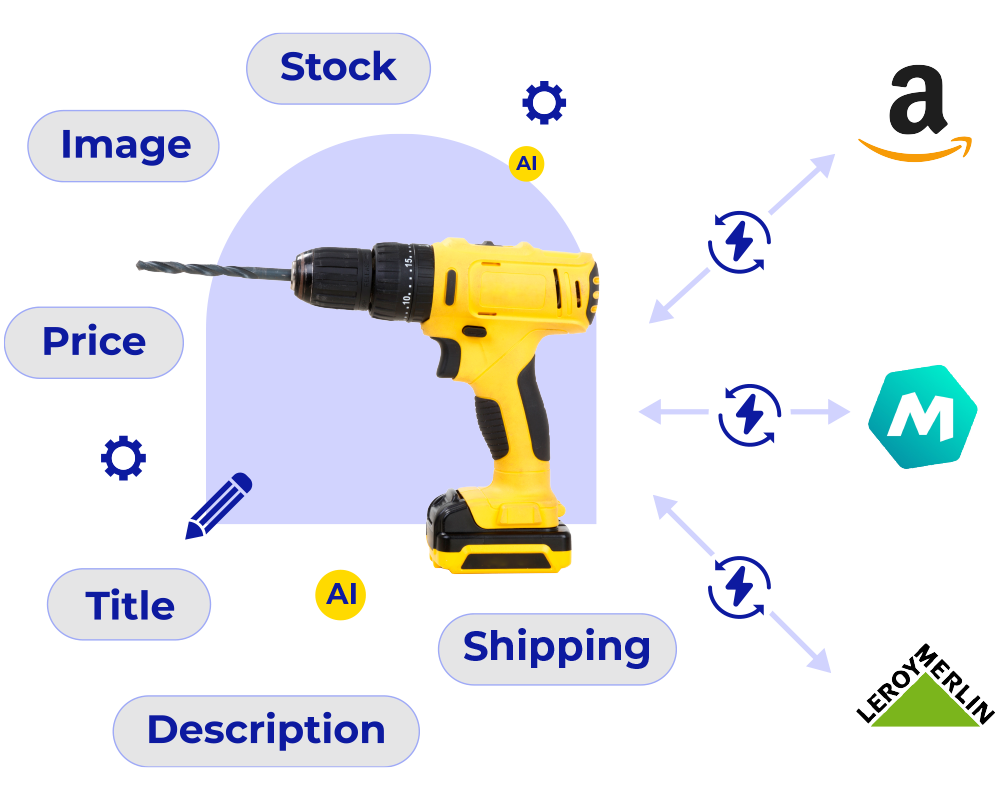
Automating the synchronization of stock, prices and orders across marketplaces and ecommerce systems is essential to reduce errors, prevent overselling and improve operational efficiency. When data is managed manually or updated with delays, inconsistencies quickly appear between channels, leading to stock issues, pricing errors and fragmented order management. By centralizing data flows and automating synchronization, brands can ensure accurate information across all channels, streamline operations and scale marketplace activity without increasing complexity.

  • Synchronize stock, prices and orders in real time across all channels
  • Reduce overselling and stock inconsistencies
  • Automate data flows between systems and marketplaces
  • Centralize operations to improve efficiency
  • Scale marketplace activity without increasing workload


Why synchronization is a key operational challenge

Managing multiple marketplaces alongside ecommerce systems creates complex data flows. Each channel generates orders, impacts stock levels and requires accurate pricing.

Without proper synchronization, businesses face:

  • Overselling due to delayed stock updates
  • Inconsistent pricing across marketplaces
  • Manual and time-consuming order management
  • Fragmented data between systems

These issues reduce efficiency and negatively impact customer experience.


What needs to be synchronized across channels

To ensure reliable operations, three critical data flows must be aligned:

Synchronizing these elements ensures data consistency and operational stability.


How to automate synchronization effectively

Centralize data management

A centralized platform acts as a hub between ecommerce systems and marketplaces. It ensures that all data flows are managed from one place, reducing complexity and improving consistency.

Enable real-time synchronization

Real-time updates are critical to avoid delays. Every stock or price change should be reflected instantly across all connected channels.

Automate workflows and updates

Automation reduces manual effort and errors:

  • Trigger stock updates after each order
  • Update prices across all marketplaces simultaneously
  • Synchronize order statuses automatically

Apply rules to control data consistency

Automation rules help standardize and control data flows:

  • Adjust stock availability dynamically
  • Apply pricing rules across channels
  • Ensure consistent data formats

Monitor synchronization and resolve issues

Continuous monitoring allows teams to detect and fix problems quickly:

  • Identify synchronization delays
  • Track failed updates or errors
  • Maintain accurate data across systems


Practical example: reducing errors through automation

A retailer managing multiple marketplaces manually may experience frequent inconsistencies in stock and pricing, leading to overselling and operational inefficiencies.

By automating synchronization:

  • Stock levels are updated instantly across all channels
  • Prices remain consistent across marketplaces
  • Orders are centralized and processed efficiently

This reduces errors and improves overall marketplace performance.


How NetMarkets helps

NetMarkets by Lengow provides a centralized platform to automate synchronization across marketplaces and ecommerce systems.

With NetMarkets, ecommerce teams can:

  • Synchronize stock, prices and orders across 70+ marketplaces and 200+ channels
  • Centralize order management from multiple marketplaces
  • Automate product feed updates to ensure data consistency
  • Monitor synchronization issues and errors in real time
  • Reduce overselling risks through automated workflows
  • Scale marketplace operations efficiently

NetMarkets enables brands to reduce operational complexity, improve data accuracy and manage marketplace activity at scale.

Request a demo


Conclusion

Automating the synchronization of stock, prices and orders is essential to reduce errors and improve marketplace efficiency. By centralizing data and enabling real-time updates, brands can prevent overselling, streamline operations and scale their marketplace strategy effectively.

FAQ – NetMarkets | Marketplace synchronization

Why is synchronization important for marketplaces?

Synchronization ensures that stock, prices and orders are consistent across all channels, preventing errors and improving efficiency.

Can synchronization be fully automated?

Yes, using centralized platforms and automation rules, businesses can manage data flows across marketplaces without manual updates.

What happens if synchronization is not implemented?

Without synchronization, businesses may face overselling, pricing inconsistencies and operational inefficiencies.

3,600+ brands & distributors grow with us