Is it profitable to sell on TikTok Shop?
TikTok Shop vs. Amazon: how is TikTok Shop different from a traditional marketplace?
TikTok Shop and Amazon both let brands sell online, but shoppers reach products in opposite ways. On Amazon, they search for something they already want. On TikTok Shop, they discover it in a video or a live before they ever look for it. That difference changes how you select products, build listings and handle fulfilment on each channel.
Table of content
What is TikTok Shop?
TikTok Shop is TikTok’s in-app commerce solution. Brands and retailers list products and sell them inside the app, through product pages, shoppable videos, live shopping and creator or affiliate content.
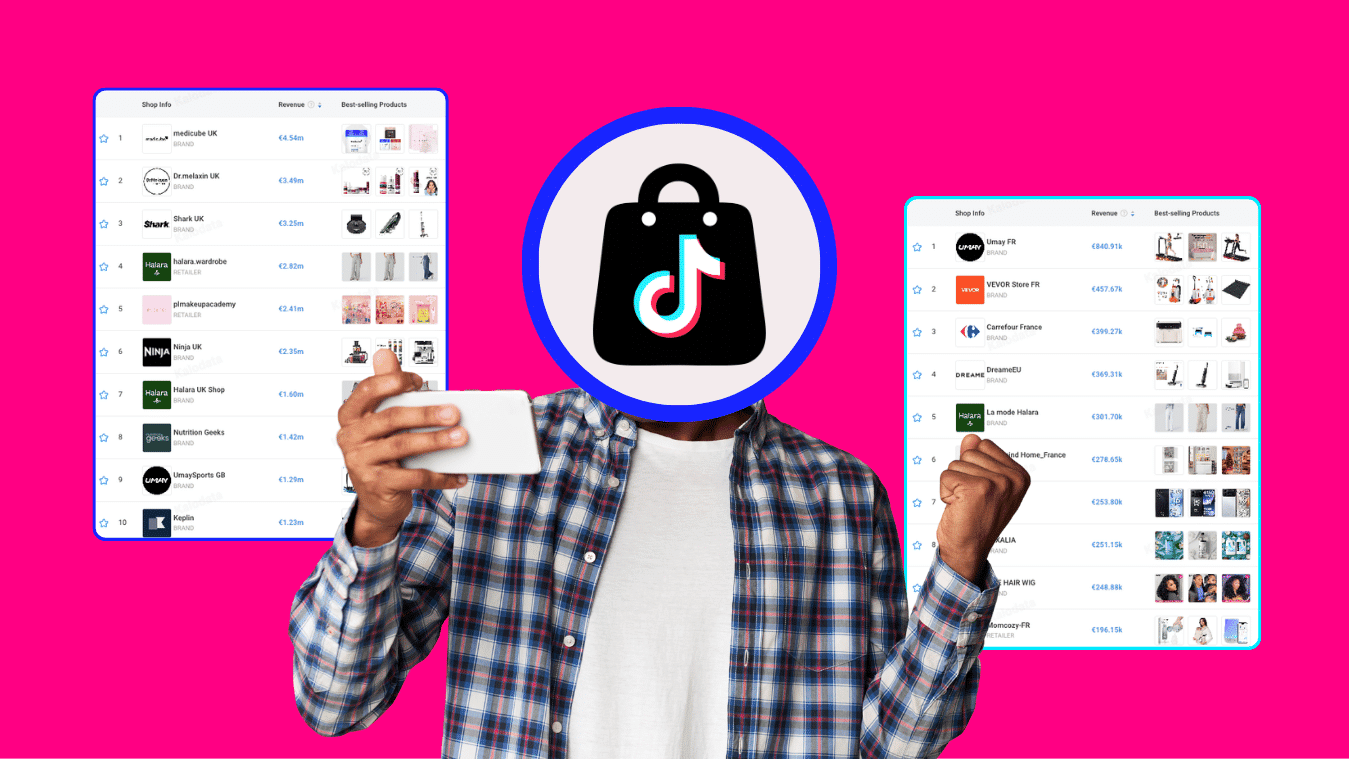
In Europe, the channel already generates significant volumes. Across Germany, France, Spain and Italy, TikTok Shop generated an estimated €498.8 million in GMV over the 90 days to 9 July 2026, led by Germany (€174.7 million) and France (€132.8 million), according to Lengow and Kalodata estimates.
TikTok Shop vs traditional marketplaces: the main differences
TikTok Shop follows a different commercial model from traditional marketplaces. The table below summarises the main differences for merchants, from product discovery and catalogue management to visibility, fees and logistics.
| Dimension | Traditional marketplaces | TikTok Shop |
|---|---|---|
| Shopping behaviour | Search and comparison | Discovery and inspiration |
| Product presentation | Product listings, reviews and structured product data | Shoppable videos, creator and affiliate content, live shopping, Shop Tab and Brand Showcase |
| Assortment logic | Broad, structured and continuously available catalogue | Selected, demonstrable products |
| Visibility drivers | Search ranking, price, reviews and availability | Content performance, creator activity, recommendations and promotions |
| Fee structure | Marketplace referral fees + fulfilment costs, such as FBA fees on Amazon | TikTok Shop commission + creator or affiliate commission on attributed sales |
| Logistics | Seller- or platform-managed fulfilment, such as Amazon FBA | Seller-managed fulfilment or Fulfilled by TikTok (FBT), available in Germany and Spain |
On TikTok Shop, creator commissions come on top of the platform commission, so margins need to be calculated product by product. For a detailed breakdown, see Is it profitable to sell on TikTok Shop?

Why catalogue management works differently
The two models give catalogues different roles. Traditional marketplaces are built to capture existing demand, while TikTok Shop can surface products before shoppers actively search for them. This difference shapes assortment decisions, product information and catalogue maintenance.
Assortment and product selection
Traditional marketplaces such as Amazon, Cdiscount and Zalando can support broad, structured and continuously available catalogues. Brands use them to cover a wide product range and maintain consistent availability across categories.
On TikTok Shop, brands can take a more selective approach to product activation. Products with clear use cases, visible benefits or simple demonstrations are easier to support through shoppable videos, creators, live shopping or promotions. The rest of the catalogue can stay listed: brands simply push first the products that are easiest to show on video.
Product information and marketplace setup
Setting up a TikTok Shop listing involves familiar marketplace tasks such as category mapping, product variants, brand information and shipping details. TikTok Shop adds several rules that affect how products can be listed and sold:
- Listing review and compliance: TikTok Shop reviews product listings and shops against its product and content requirements. Non-compliant listings may be rejected or removed.
- Restricted categories: some products require supporting documents and mandatory product attributes before they can be listed. TikTok Shop reviews this information and only allows the seller to list the product once the relevant requirements have been met.
- No Buy Box model: on Amazon, different sellers can offer the same product through one shared EAN or ASIN listing and compete for the Buy Box. TikTok Shop does not use this shared-listing mechanism: sellers manage their own product listings and need to build visibility through the platform’s selling surfaces.
Catalogue maintenance and fulfilment
Traditional marketplaces require regular updates to product information, pricing, stock and fulfilment details.
On TikTok Shop, catalogue maintenance also covers promotional campaigns, product exclusions and publication statuses, on top of prices and stock.
Brands must also meet TikTok Shop’s fulfilment requirements: orders must be shipped within three business days of payment confirmation, with a tracking number provided to TikTok Shop (see the TikTok Shop shipping requirements).
Which channel should you start with?
Choosing the right channel depends on whether you want to capture existing demand or create fresh interest before buyers actively search.
- Traditional marketplaces suit broad catalogues with structured data, where shoppers are already searching for your products.
- TikTok Shop fits products that need to be demonstrated through content, creators or live shopping.
- A combined approach lets brands capture search intent on marketplaces while building discovery on TikTok Shop.
To compare TikTok Shop with Amazon, Temu, AliExpress and Cdiscount, see our guide TikTok Shop vs Amazon, Temu, AliExpress: which channel to choose.
Combine TikTok Shop and marketplaces with Lengow
Managing TikTok Shop alongside Amazon, Cdiscount and other marketplaces requires brands to handle different catalogue, content and fulfilment requirements. Lengow provides a centralised way to manage this multichannel setup.
With Lengow, you can:
- Distribute your catalogue on TikTok Shop, Amazon, Cdiscount and more
- Synchronise your orders, stock and product data
- Adapt your catalogue to each channel’s requirements
- Feed your TikTok Ads catalogue with NetAmplify
Darty, for example, went live on TikTok Shop in 40 days with Lengow.
TikTok Shop adds shopping to a social media platform: users can discover products in videos, creator content, live shopping or the Shop tab, then purchase in the app. Traditional marketplaces such as Amazon are primarily shopping destinations where users search for products, compare listings and place orders.
Neither channel is universally better. Amazon suits existing search demand and broad catalogues, while TikTok Shop suits demonstrable products supported by content, creators or an active TikTok audience.
They use the same core product information, but each channel has its own requirements. On TikTok Shop, brands may need to map products to TikTok Shop categories, configure brand information in Seller Center, manage variants and promotions. The catalogue should therefore be adapted rather than copied unchanged across platforms.
Resources & insights
Insights to help you navigate e-commerce complexity
Access a curated selection of content designed to support your e-commerce strategy and help you make better decisions at every stage of growth.
List everywhere, manage it once
AI-powered feed management, global price monitoring, and the analytics to connect them, all in one platform
3,600+ brands and distributors grow with us