

Amazon Marketplace: everything you need to know
Best for: brands, retailers and distributors across almost every product category looking to reach a large international audience, grow marketplace revenue quickly and manage both B2C and B2B sales through one of the world’s most powerful ecommerce ecosystems.

|
|
|
|
| Fast | Longer |
|
|
|
|
|
|
Amazon is one of the most widely used ecommerce and marketplace ecosystems in the world. For sellers, it combines massive customer reach, strong conversion mechanics, international selling opportunities, fulfilment services, advertising tools and a highly competitive product discovery environment.
Unlike vertical marketplaces, Amazon is relevant for almost every product category. Its strength lies in search demand, customer trust, operational scale and the ability to sell across multiple countries through a marketplace model used by brands, retailers, distributors and independent sellers.
Success on Amazon depends on more than simply listing products. Sellers need high-quality product data, competitive pricing, strong stock reliability, compelling product pages, fast fulfilment options and a clear strategy to improve visibility and win the Buy Box.
Key figures
Sources: Amazon Small Business Empowerment Report, Amazon Global Selling, Lengow Amazon integration, Lengow marketplace data.
Available countries through Lengow
Who shops here?
Amazon attracts one of the broadest ecommerce audiences in the world. Shoppers use it for everyday purchases, product discovery, price comparison, fast delivery, trusted reviews, branded goods, long-tail selection and repeat orders.
The marketplace is relevant for both impulse-driven and highly considered purchases. Customers compare prices, delivery promises, reviews, product images, product titles, bullet points and seller reputation before choosing an offer.
Amazon Business also extends the opportunity to B2B buyers. Professional sellers can activate B2B features such as business pricing, quantity discounts and invoicing tools directly through Seller Central.
Mass-market shoppers
Consumers buying everyday goods, household items, electronics, fashion, beauty, home products and more.
Prime-driven buyers
Customers who value fast delivery, reliable fulfilment and frictionless repeat purchasing.
Comparison shoppers
Buyers comparing reviews, price, delivery options, product content and Buy Box offers before purchasing.
Business customers
B2B buyers using Amazon Business for procurement, bulk selection, business pricing and invoicing workflows.
What to sell on Amazon?
Amazon is a generalist marketplace, which means it covers almost every major ecommerce category. The opportunity is broad, but competition is also high. Sellers need to prioritise strong product content, stock reliability, pricing strategy and category-specific compliance.
Electronics & appliances
Consumer electronics, small appliances, accessories, connected devices and replacement parts.
Fashion & accessories
Apparel, shoes, bags, eyewear, jewellery and fashion accessories.
Home, garden & DIY
Furniture, home decor, garden products, tools, lighting, storage and home improvement goods.
Beauty, health & grocery
Beauty products, personal care, wellness items, grocery and repeat-purchase consumables.
What you need to know before applying
Amazon sellers can operate through Seller Central, while some brands may also work through Vendor Central if they sell directly to Amazon. Most marketplace sellers use Seller Central to manage listings, offers, orders, pricing, customer communication and fulfilment choices.
Selling model
Use Seller Central to sell as a marketplace seller, or Vendor Central when selling products directly to Amazon.
Fees
The Professional plan has a monthly fee, while referral fees vary by product category. Optional services such as FBA and advertising add extra costs.
Buy Box
Winning the Buy Box is central to performance and depends on factors such as price, availability, fulfilment, seller metrics and offer quality.
Fulfilment
Sellers can use Fulfilment by Amazon, Seller Fulfilled Prime or their own fulfilment workflows depending on eligibility and strategy.
Product identifiers
Products generally require accurate identifiers, structured attributes, titles, bullet points, images and category-specific data.
Advertising
Sponsored Products and other Amazon Ads formats can help sellers increase visibility in competitive categories.
How to sell on Amazon with Lengow
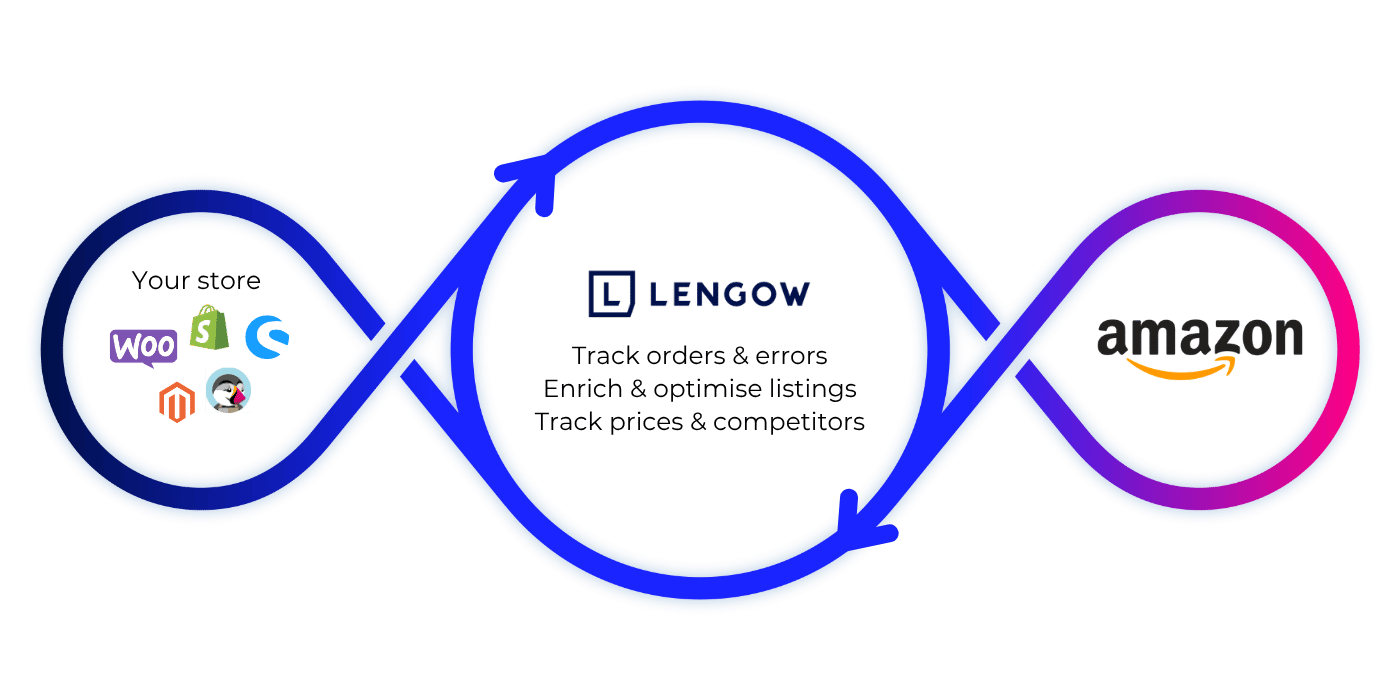
Selling on Amazon requires structured product data, fast offer updates, competitive pricing, product page optimisation and operational discipline. Lengow helps sellers centralise Amazon catalogue management and automate key workflows across countries and stores.
| Marketplace challenge | What successful sellers do | What Lengow automates |
|---|---|---|
| Complex catalogue structure | Prepare clean product feeds with the right identifiers, attributes, titles, bullet points and categories. | Product feed mapping, rules, filters and channel-specific catalogue adaptation. |
| Category mapping | Map each product to the right Amazon category and browse structure. | AI Category Mapping helps suggest the most relevant marketplace categories. |
| International expansion | Adapt product content by country, language and local buyer expectations. | AI Content Localisation helps scale localised marketplace content across countries. |
| Product page quality | Optimise product titles, descriptions, bullet points, images, pricing and reviews to improve conversion. | Rules and product data optimisation workflows help improve listing quality at scale. |
| Image compliance | Prepare marketplace-ready visuals that meet Amazon image expectations. | AI Image Compliance helps improve image readiness for marketplace publication. |
| Stock and order management | Keep inventory accurate and process orders quickly to protect seller metrics. | Stock synchronisation and Amazon order tracking directly from the Lengow platform. |
| Price competitiveness | Monitor competitor offers, price positioning and Buy Box pressure. | NetRivals provides competitive price intelligence, monitoring and dynamic pricing insights. |
| Marketplace operations | Track reports, rejected products, offer issues, orders and account-level performance regularly. | Centralised reporting, feed monitoring, rules and marketplace performance workflows. |
With Lengow AI Studio, AI becomes part of marketplace execution through automated category mapping, catalogue optimisation, content localisation and image compliance workflows.
Expanding cross-border ecommerce on Amazon and other marketplaces
Star SRL is an eyewear and fashion accessories company that uses marketplaces as a key lever for international ecommerce expansion. With Amazon and other European marketplaces, the company needed a scalable way to manage product feeds, marketplace integrations and catalogue growth across multiple countries.
“We have stayed with Lengow since 2017 not only because all marketplace integrations are smooth, but also because the platform is very easy to use and intuitive. It is really easy for someone who is not from IT to use it effectively.”
Marketplaces Manager, Star SRL
Powering industry leaders
Discover more marketplace integrations





Take control of your e-commerce performance
Join thousands of brands and retailers using Lengow to manage, optimise and scale their e-commerce operations across every channel, with data-driven insights and full control.


